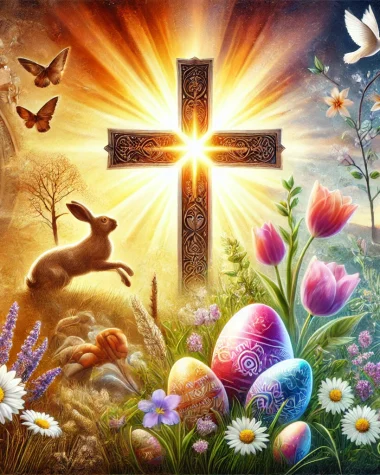
Header photo by Mary Potoplyak on Unsplash
The Ancestry of Easter
Easter has deep roots that intertwine with various ancient traditions and cultures. The term “Easter” is believed to derive from “Eostre”, a goddess of spring celebrated by the Anglo-Saxons. They welcomed the spring equinox, symbolizing rebirth and renewal. Festivals celebrating fertility and the changing of seasons paved the way for modern Easter celebrations, indicating a cross-over of pagan customs with early Christian teachings.
In addition to Eostre, various cultures around the world celebrated the arrival of spring through rituals and festivals. For instance, in ancient Egypt, the festival of Osiris involved themes of resurrection and fertility which coincided with the agricultural cycle. Such connections illustrate how deeply ingrained the themes of renewal and resurrection are in human tradition.
Transition from Pagan to Christian Celebrations
As Christianity spread, many pagan festivals were adapted into Christian celebrations. The early church sought to convert pagans and decided to set Easter in the springtime, aligning it with the celebration of Christ’s resurrection. Notably, the First Council of Nicaea in 325 AD formalized Easter as the first Sunday after the full moon on or after the vernal equinox. This timing reflects both lunar and solar cycles, showcasing an integration of earlier seasonal beliefs with Christian theology.
For further reading, visit Easter holiday.
Easter’s Evolution Through Time
Throughout the centuries, Easter has transformed significantly. For instance, in the Middle Ages, it became a deeply religious occasion with elaborate church services. Communities participated in solemn observances, leading to an increased emphasis on its significance within the Christian tradition. During this period, customs like coloring Easter eggs, symbolizing new life, took hold.
Today, the act of decorating eggs has evolved into various global customs, from Ukrainian Pysanky to the more contemporary chocolate eggs. The tradition of egg rolling, believed to symbolize the rolling away of the stone from Christ’s tomb, is still practiced in various cultures. This illustrates how traditional practices can take on new meanings over time.
Easter also became a time for feasting and merriment, contrasting with the fasting during Lent. Over time, elements of celebration emerged, such as Easter bunnies and egg hunts, blending into the festive atmosphere we see today. The association of the Easter Bunny with the holiday can be traced back to German immigrants in the 1700s who brought the tradition of the “Osterhase,” a hare that laid colored eggs for children.
For further reading, visit Easter.
Regional Variations and Practices
Different cultures have developed unique Easter traditions that reflect their local heritage. For example, in Italy, the “Scoppio del Carro” festival features a cart filled with fireworks and the ceremonial lighting of a fuse from a holy fire; this is believed to ensure a good harvest. Meanwhile, in Spain, Semana Santa (Holy Week) includes elaborate processions that evoke profound faith and community involvement. These processions often display intricate religious floats adorned with flowers and candles, uniting communities in shared observance.
In Greece, Easter is marked by a variety of customs, including the painting of red eggs to symbolize the blood of Christ and the significant feast following the midnight service. The unique blend of local flavors within traditional dishes adds to the cultural richness of the celebration, illustrating how Easter observance is interwoven with culinary traditions.
These regional variations highlight how Easter ceremonies are interlaced with cultural identities, making the celebration a mosaic of experiences.
For further reading, visit History of Easter.
The Role of Service in Modern Easter Celebrations
Today, one of the core elements of Easter is attending church services, where communities gather to celebrate and reflect on the resurrection. Many churches conduct sunrise services, representing the dawn of a new beginning for believers. These services are often marked by hymns, prayers, and reflections on the resurrection narrative, inviting congregants to engage with the profound message of hope and renewal.
Understanding church services can enhance your Easter experience, as you may find that local practices differ significantly, intertwining personal faith stories with age-old rituals. Some churches also incorporate community outreach during Easter, emphasizing themes of charity and selflessness, reminding attendees of the central Christian message of love and service.
For further reading, visit Lent.
Connecting Easter with Lent and Good Friday
Lent, a 40-day period of fasting and reflection leading up to Easter, helps prepare the faithful for this significant day. Participation in Lent guides individual journeys as people often engage in prayer, penance, and acts of charity. This ritualistic preparation heightens the awareness of spiritual commitment and development leading to Easter.
Good Friday, the day before Easter, is marked by solemn observances of Jesus’s crucifixion, elevating the joy of Easter to a deeper spiritual level. The juxtaposition of Good Friday’s mourning with Easter Sunday’s celebration emphasizes the profound belief in redemption and resurrection within Christian faith. This connection between the somber aspects of faith and the joyous resurrection illustrates the comprehensive nature of Easter.
For further reading, visit Understanding Lent.
Understanding the Spiritual Significance
For Christians, Easter transcends mere cultural practices. It symbolizes hope, renewal, and the triumph of life over death. The resurrection is seen as the cornerstone of Christian faith, offering believers assurance of eternal life. In this context, the practices of Easter – such as communal services, prayer, and acts of kindness – serve as reminders of the overarching themes of faith that bind individuals to God and one another.
Engaging in traditional prayers during the Easter season can help deepen this connection and enhance your spiritual journey.
For further reading, visit Passover.
Modern Celebrations: A Blend of Tradition and Innovation
In contemporary society, Easter has evolved into a blend of religious observance and festive celebration. Families gather to share meals, participate in egg hunts, and exchange gifts. These customs, while enjoyable, often retain echoes of the more profound spiritual meanings behind them. The egg, for instance, continues to symbolize new life, reflecting the vitality of faith and rebirth. Additionally, the philanthropic aspect of Easter has gained prominence, with various organizations hosting charitable events that emphasize giving back to the community.
Community events and church gatherings create a space where joy and spirituality converge, offering a unique experience during the Easter season. Local festivals often include parades, music, and arts, celebrating the cultural aspects of Easter while ensuring that the essence of its spiritual significance remains recognized.
Challenges in Preserving Religious Significance
As commercialism influences various aspects of life, there’s a concern about preserving the spiritual essence of Easter. The saturation of consumerism during this season, with countless advertisements promoting candy and toys, can dilute the true meaning of the holiday for many. Balancing festivities with traditional practices can be challenging as families navigate their celebrations amidst commercial distractions.
Some churches actively promote programs that educate congregations about the importance of Easter, attempting to combat the distractions posed by commercialization. Engaging congregants in workshops, discussions, or special messages during the Lenten season serves to reinforce the spiritual core of Easter. Understanding these exchanges is crucial for those wishing to preserve the authenticity of their Easter practice while still engaging deeply in modern celebrations.
Gathering Insights from History
The history of Easter is rich and layered, demonstrating an evolution from ancient rituals into a beloved religious celebration. By studying its past, individuals can derive greater meaning from their own celebrations today. From the emergence of early Christian communities to contemporary interpretations, each facet of Easter reflects not just faith but the continuous thread of humanity connecting individuals across centuries.
The cycles of rebirth that Easter symbolizes resonate deeply within various cultures and communities, suggesting a universal desire for hope and renewal. Insights from archaeological findings related to ancient spring festivals and detailed historical accounts of tradition adaptations reveal how these ancient practices continue to influence modern observances.
Understanding Easter’s journey helps both individuals and communities engage more fully in its context and celebrations.
Final Thoughts on Embracing Easter
As iterated throughout this exploration of Easter’s history, the holiday serves as a powerful reminder of renewal, unity, and persevering faith. Whether shared through festive gatherings or solemn church services, its observance enriches lives and minds. Embracing the diversity of Easter customs while engaging with the religious meanings behind them can create an experience that’s both fulfilling and celebratory. To better appreciate the connections between Easter and other significant events, such as its relationship with Passover, check out this insightful article.